About
The firm the big consultancies won't serve. The work an agency can't do.
The origin
I built the firm I needed and couldn't find.
Greyson Jones. President. 23. Clyde, NC.
I graduated from the University of Mississippi in May 2025 with a degree in Management Information Systems. First move: Apex Systems, a consulting and staffing firm. I sat inside the enterprise CRM world: Dynamics 365, Salesforce, HubSpot, Zoho. I learned big business from the inside, learned how the machine runs, learned what transformation means when it is being sold to a Fortune 500 procurement committee instead of delivered to an operator who needs it done.
I was miserable.
“Every single day I sat in that chair, I felt it. This isn't mine. I'm building someone else's thing on someone else's timeline for someone else's vision.”
I left and started Krastor in May 2025. Sole proprietor, operating out of Belmont, NC. No clients, no team, no playbook. Just the conviction that there was a massive gap between what small and growing businesses needed and what existed to serve them. Closing that gap was worth betting on.
What followed was twelve months of figuring it out: building on live client engagements, developing the methodology, recruiting the team, refining the thesis. Not theoretical. Not academic. Done in the field, on real businesses, with real stakes.
“I learned more in twelve months than I did in four years of school. I'm figuring it out on my terms, and that makes all the difference.”
The thesis
Own the middle layer.
Not the model. The architecture between the model and how the business uses it.
The thesis crystallized in April 2026, when a mentor sent four articles with one directive: The time is now.
The framing that stuck was simple: enterprise has Cresta, a company doing $100M+ ARR, deployed at United, CVS, Marriott, doing exactly this work at Fortune 500 scale. The small and growing business has nobody. No embedded architect. No one owning the intelligence layer. No one building the system that connects the AI to how the business actually runs.
“Cresta for the Fortune 500. Krastor for the $2M service business.”
The gap is structural: enterprise has capital, procurement cycles, and vendor relationships that support dedicated AI infrastructure teams. The small and growing business has momentum, owner-operator urgency, and a total absence of anyone building their middle layer. That market is not small. It is the largest segment of the US economy, and every well-funded firm in this space ignores it. Krastor walks straight in.
What we believe
Five operating values. No filler.
Not wall-poster words. The standards every engagement is measured against, including by us.
Precision
Structure
Execution
Ownership
Impact
The bench
Not a staffing firm. An architecture firm.
Krastor owns the architecture. You own the tools you pay for directly. We don't pass through headcount. We deliver a complete capability at a fraction of what it costs to build in-house.
Greyson Jones
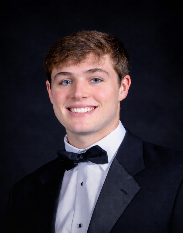
Greyson architects every engagement: strategy, system design, AI coverage model, and the roadmap that sequences it all. University of Mississippi, MIS. Started Krastor at 22, May 2025. Twenty-three now.
Prior: Apex Systems, embedded in enterprise CRM (Dynamics 365, Salesforce, HubSpot, Zoho). Left to build the firm small and growing businesses actually needed.
Responsible for: engagement architecture, client relationships, the diagnostic, roadmap sequencing, and the AI tier model (Crawl/Walk/Run).
Carson Turner
Every system Greyson architects, Carson ships. Full technical build ownership from system design to production deployment. University of Mississippi, Computer Science. D1 track athlete. Founded and grew a software business to $500K in revenue before Krastor.
Carson holds engineering veto on every build. If the implementation compromises the architecture, it does not ship. Together, the Greyson/Carson split is a complete CTO capability: one architect, one technical executor, one shared standard for what gets built.
Responsible for: technical builds, engineering decisions, deployment, and all code that ships on client engagements.
How we make money
We sell the architecture. You buy the tools.
Every engagement is custom. The relationship is maintenance and evolution.
Krastor's invoice covers the IP: the architecture, the workflow design, the custom builds, the AI agents, and the ongoing maintenance and evolution that keeps the systems compounding. That is what we charge for.
Everything else, including the CRM subscription, the automation platform, the AI model access, and the hosting, goes on your card, paid directly to the vendor. You own those relationships. When we exit, you own your stack. There is no vendor dependency on Krastor that makes it harder to leave.
Engagement starts here
Start with the diagnostic.
Thirty minutes. We map your operation, name what's actually slowing it down, and tell you what we'd do if we were running it. You get a written stack assessment after the call, whether you hire us or not.
Not limited to what's listed. Every engagement starts by assessing what your business actually needs, and we build whatever it requires.